What is so special about Boston that everyone is so enthusiastic about the capital of Massachusetts? Even my colleagues at the conference were nearly unable to stop talking about the beauty of this city, once I mentioned our plans to get there.
To answer this rather complex question, we decided to take a walk through the full downtown area. And there is no better way to do so than by following all the tourist along the Freedom Trail, guiding you from the east to the west and finally up to the north into the port. So, before showing all the images of the 5 km long walk with its main stops (and of course some background information about what you actually see there and why it is of that high importance for all the American tourists in Boston), let’s quickly answer the questions from the beginning, or at least, the answer we found for ourselves:
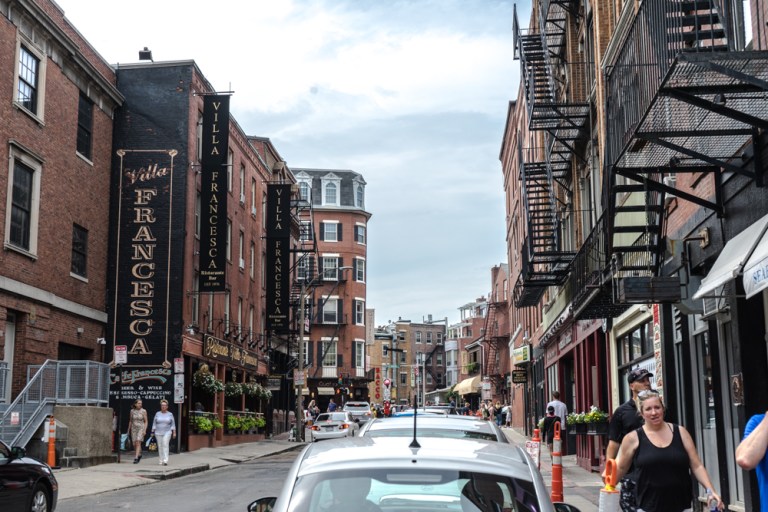
Boston, as important it is for the American history, is probably the place in the U.S. that comes closest to what we know from Europe. While there is a truly American center with endless skyscrapers, the famous regions are unbelievably similar to what we know in Europe. While walking through the sometimes narrow streets (unlike most parts of the U.S. they are almost never perpendicular to each other) along which old brick-stone buildings are connected to some kind of city wall, you get the feeling of walking through some parts of England or even Italy, if you happen to walk through Little Italy. Furthermore, there are some of the oldest remaining buildings in America, which you are normally only used to see in major city in Europe. It is therefore of no wonder, that Boston gets such a great resonance and as everyone else, we really liked it so far. Boston consists of very different parts, perfectly and artistically connected to each other, making it possible that everyone finds a district that fits him well.
And for all who actually continued reading this far, here are some impressions of the different highlighted locations (we went for 15 out of 16 due to exhaustion, nevertheless observed the last one from the distance) of the famous Freedom Trail:
1 – Boston Common (1634)
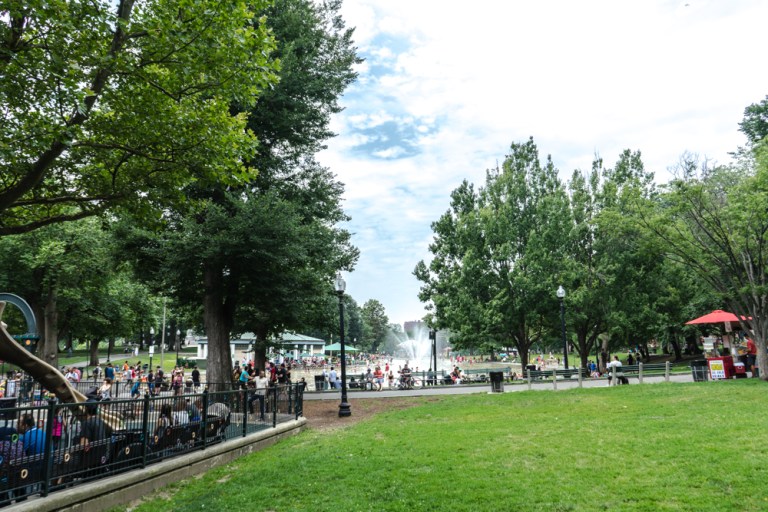
Oldest public park in America, which was used as a grazing field as was as a training field for the British militia. Furthermore it has been the site of hangings, duels and public celebrations.
2 – Massachusetts State House (1798)

The building costed 133k $ (3 times the budget) and its dome was first made out of wood before covered with copper to prevent leakage. The gold cover was added in 1874.
3 – Park Street Church (1809)
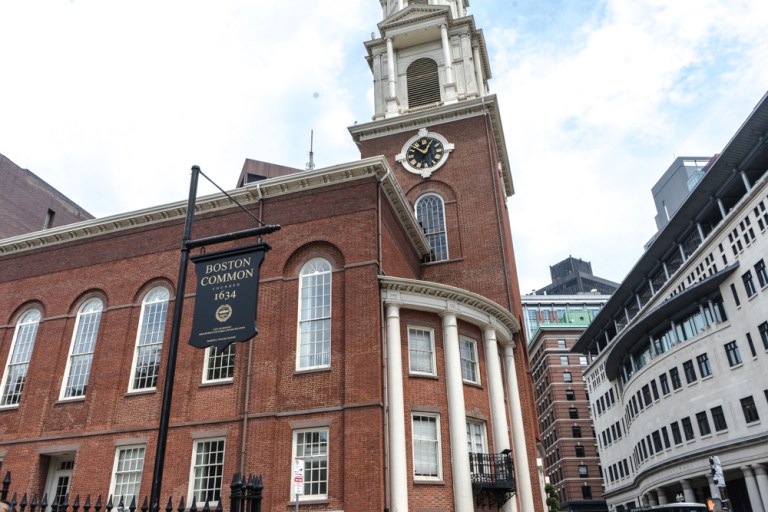
Originally used as a grain storage, gunpowder was stored in the crypt during the war of 1812. For many years, the church was the first landmark travelers saw while approaching Boston.
4 – Granary Burying Ground
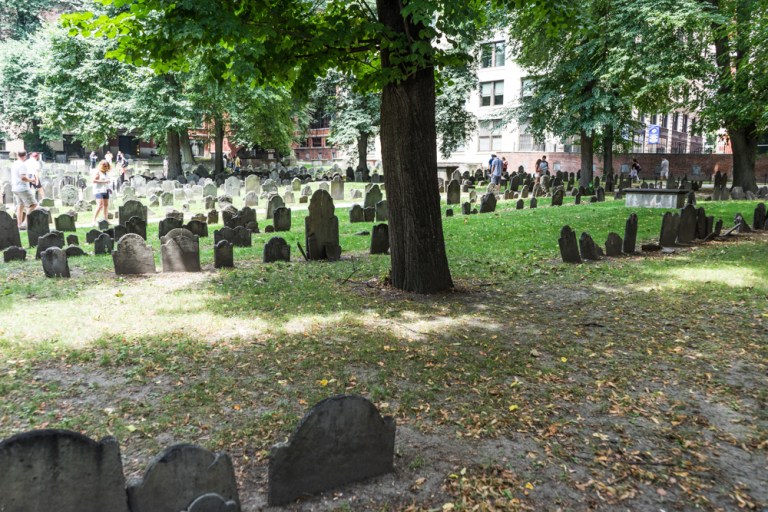

The name was given due to its location right next to the church from the previous image and its use in early years. Prominent historic figures are buried here including John Hancock, Samuel Adams and the Boston Massacre victims.
5 – King’s Chapel (1688)

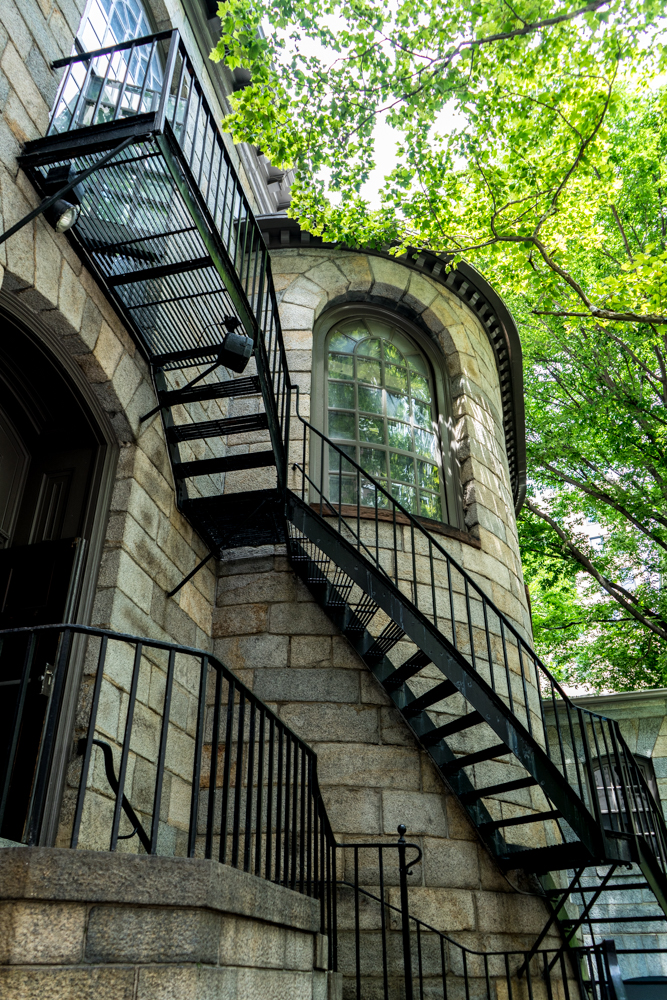
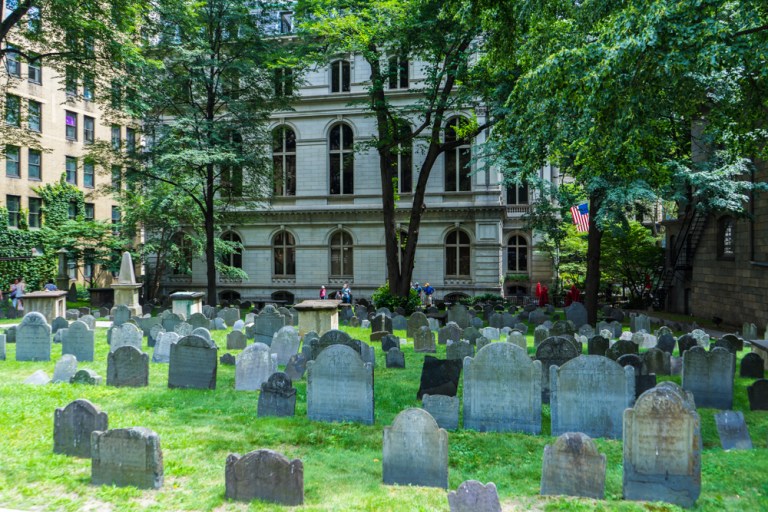
The chapel was built under the order of King James II as the first Anglican Church in America. Previously made out of wood, the stone church was built around the original chapel.
6 – First Public School (1635)
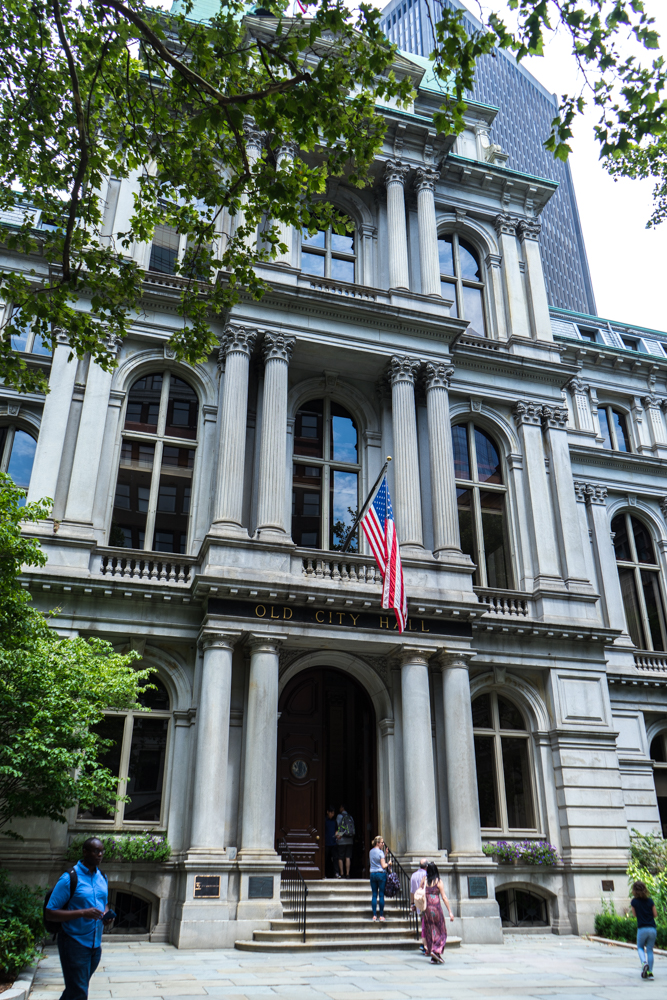
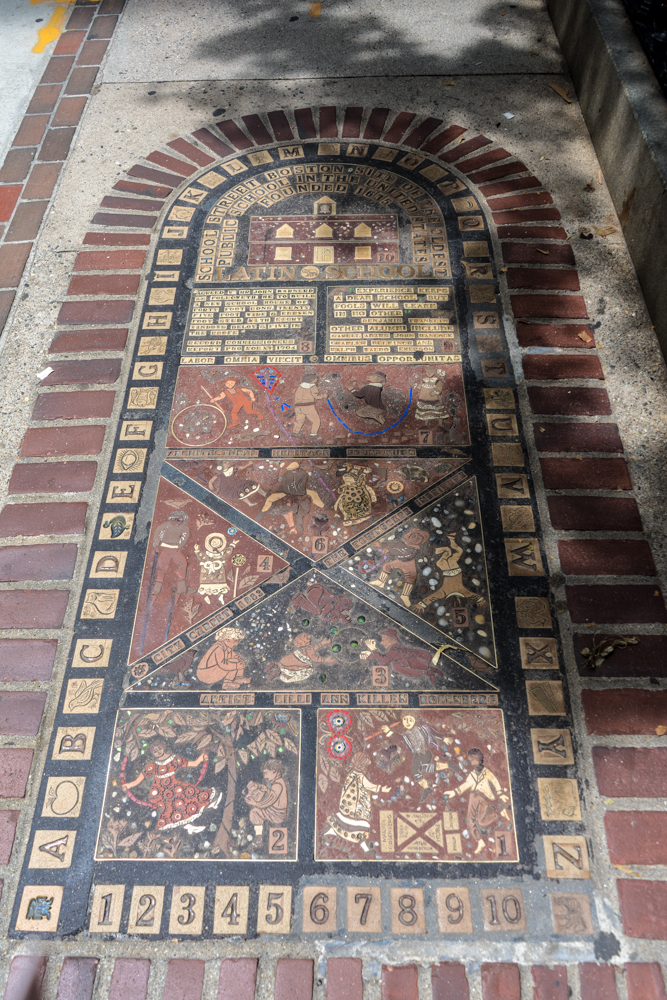
The first public school, Boston Latin School, was visited by many key figures of the American revolution, e.g. Ben Franklin, John Hancock and Samuel Adams.
7 – Old Corner Bookstore (1600s)
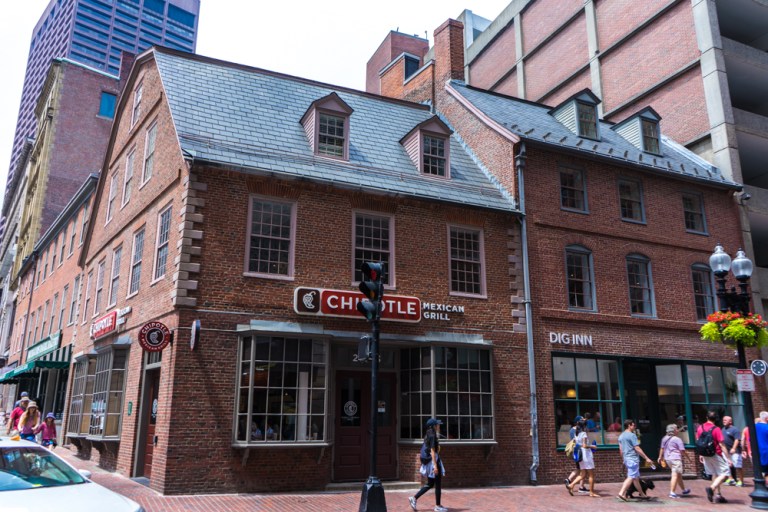
The old corner bookstore (today unfortunately a Chipotle fastfood restaurant) was Boston’s literature center and therefore of high importance for the American revolution.
8 – Old South Meeting House (1729)
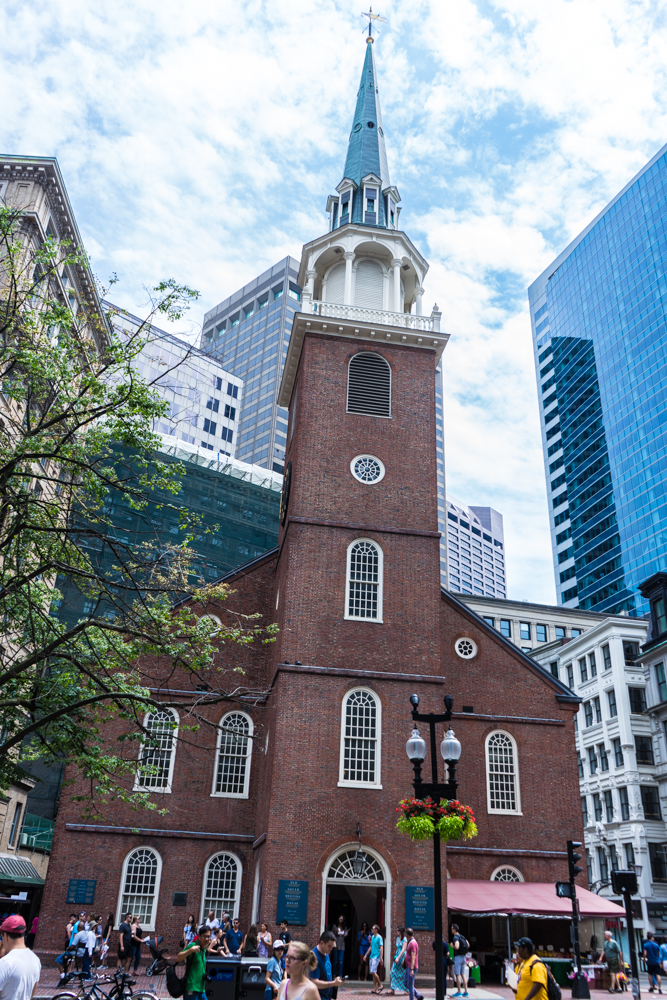
This is the second oldest church in Boston and was used for public meetings when the angry crowd was too large for the Faneuil Hall (see below). The most famous meeting, attending over 5000 protesters, was due to the tax on tea.
The British occupants used the building as a stable and riding school, while the internal library was used as kindling.
9 – Old State House Museum (1713)

The old state house right in the center of Boston was the political center as well as the housing for the precursor of stock exchange. It was furthermore the location of the Boston Massacre (see below) and played a central role in the rebellion due to the reading of the Declaration of Independence from the balcony.
10 – Boston Massacre (1770)
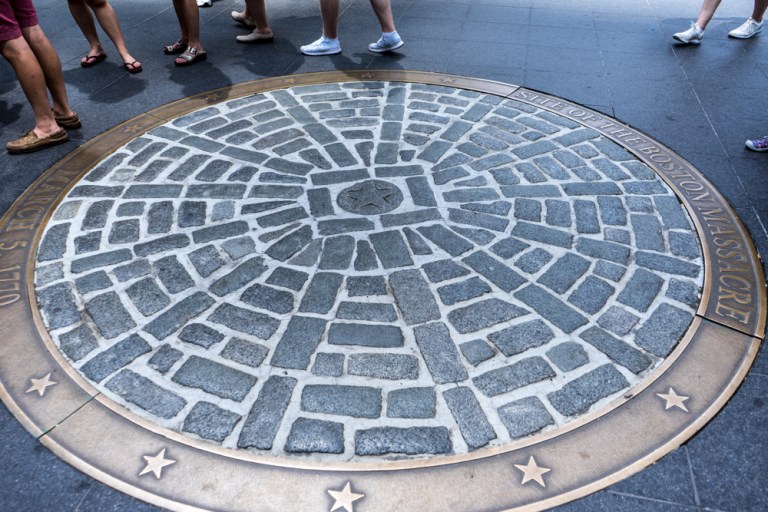
The Boston Massacre (location is marked by this ring in front of the Old State House) is told to be one of the key elements leading to the American revolution as 5 men were killed in a clash between Colonists and British troops.
11 – Faneuil Hall (1742)
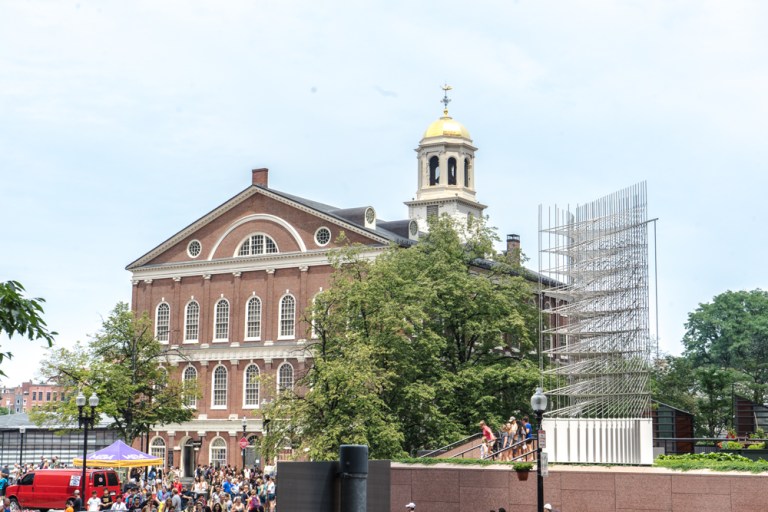

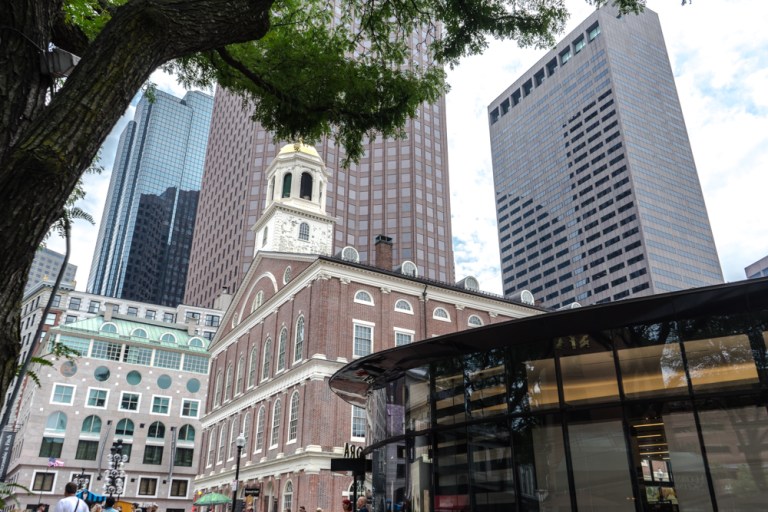
The Faneuil Hall was as gift from Peter Faneuil as mainly used for meeting and public discussions. It is the location, where the opposition against the British authority was formed, fuelled by speeches of Samuel Adams and James Otis. In later years it was also the location where anti-slavery and women’s right movements were founded.
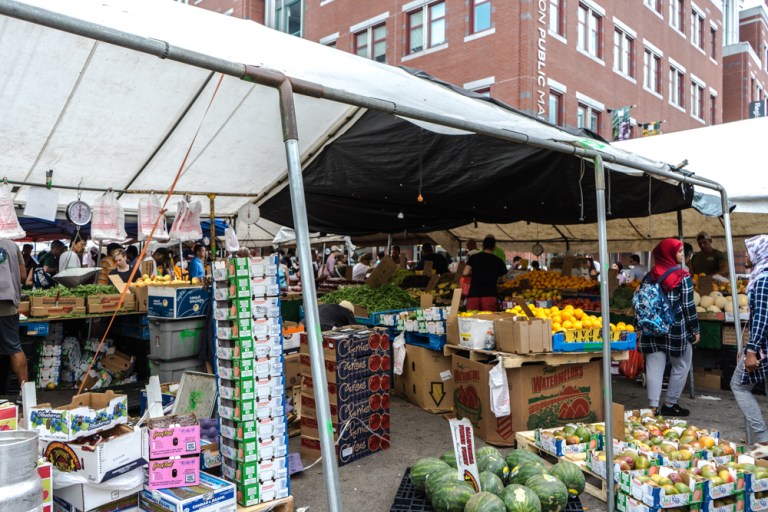
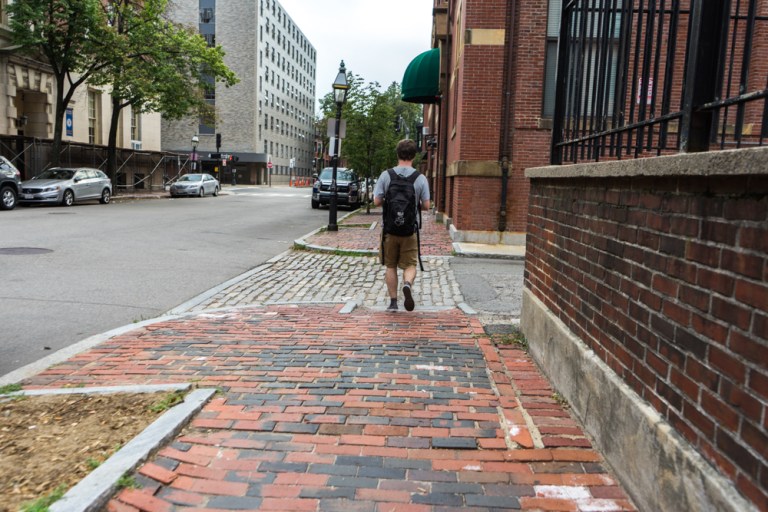
Below you can see some images of our walk to the next location through the rather narrow streets of Boston.

12 – Paul Revere House (1680)
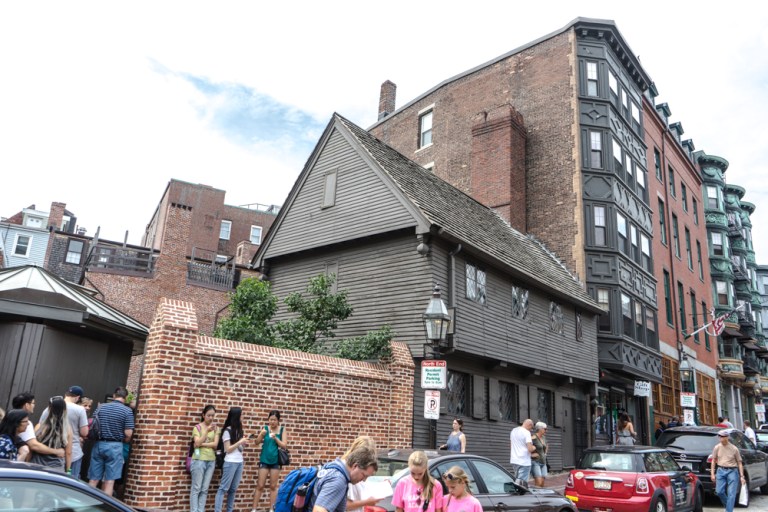
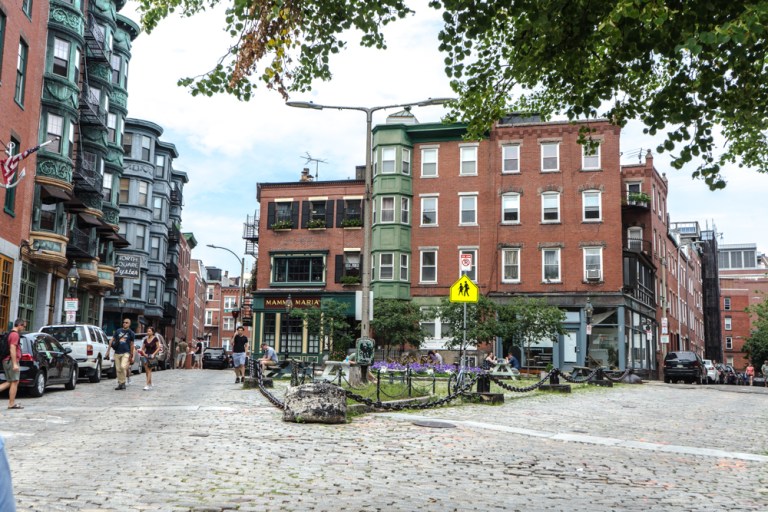
This is the oldest private building in Boston downtown and was used by Paul Revere (famous for the midnight ride to warn Adams and Hancock of the British plans). The house is located in Little Italy.
13 – Old North Church (1775)

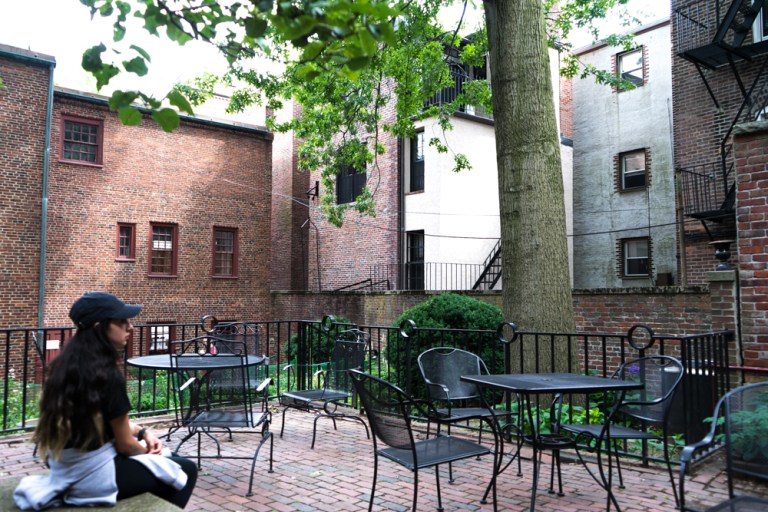
The Old North Church was the place where Paul Revere got the sign (two lanterns) to start his midnight ride. It is widely regarded as the spark leading to the American revolution. The statue in front of the church shows Paul Revere on his horse. The church still contains among other historical things the first bells brought to the Colonies as well as the original clock from the 18th century.
14 – Copp’s Hill Burying Ground

The graveyard with the remains of many key figures for the American revolution and anti-slavery activists was used by the British to position their cannons during the Battle of Bunker Hill due to its height and prominent location.
Again some images of our path over the Charles River to the Docks of Boston.

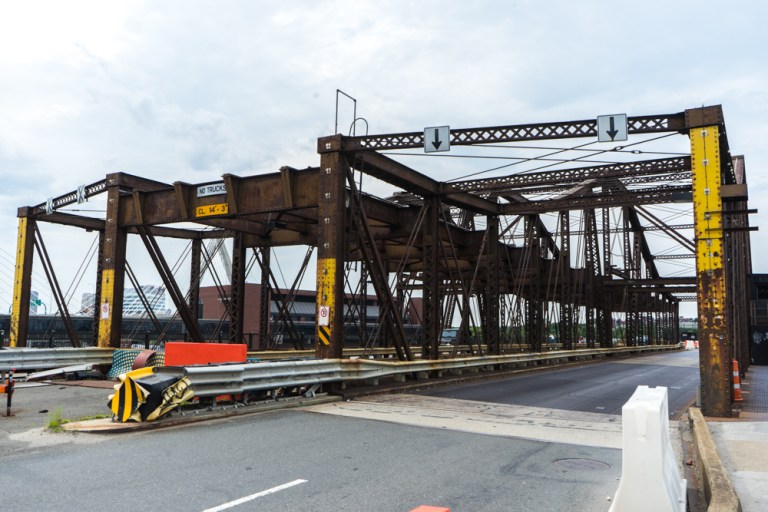
15 – USS Constitution – Old Ironsides (1797)
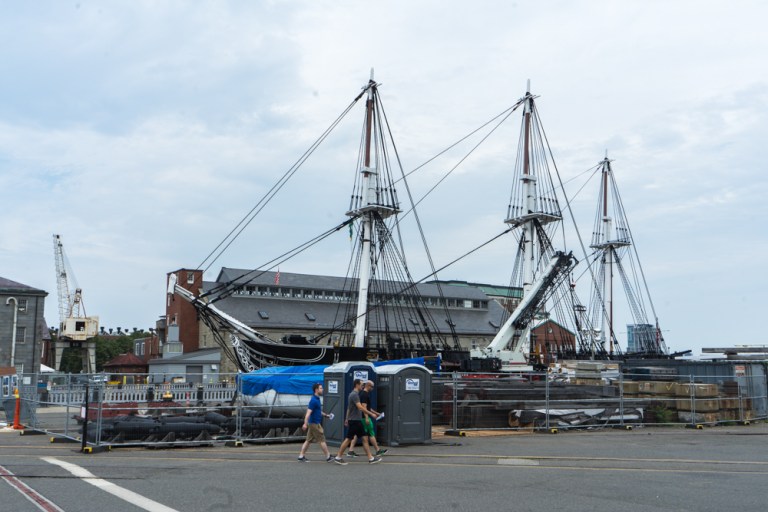
The oldest commissioned warship afloat got its name during the war of 1812 as British cannonballs seemed to bounce off of the impenetrable hull and was the key element of the early-American Navy.
16 – Bunker Hill Monument (1775)

The Bunker Hill Monument (221ft or 67m) is a reminder of the bloodiest battle in the American Revolution, leaving 1400 causalities on the field, as the badly equipped Colonists faced the powerful British Army.
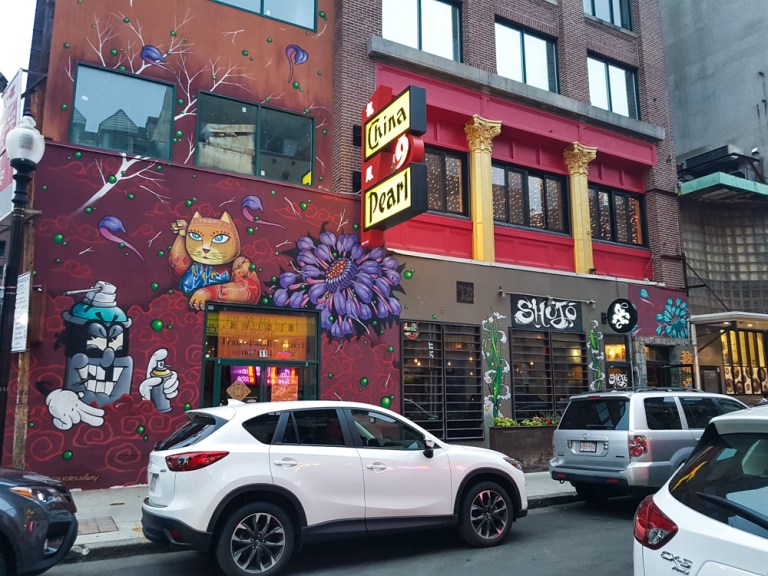
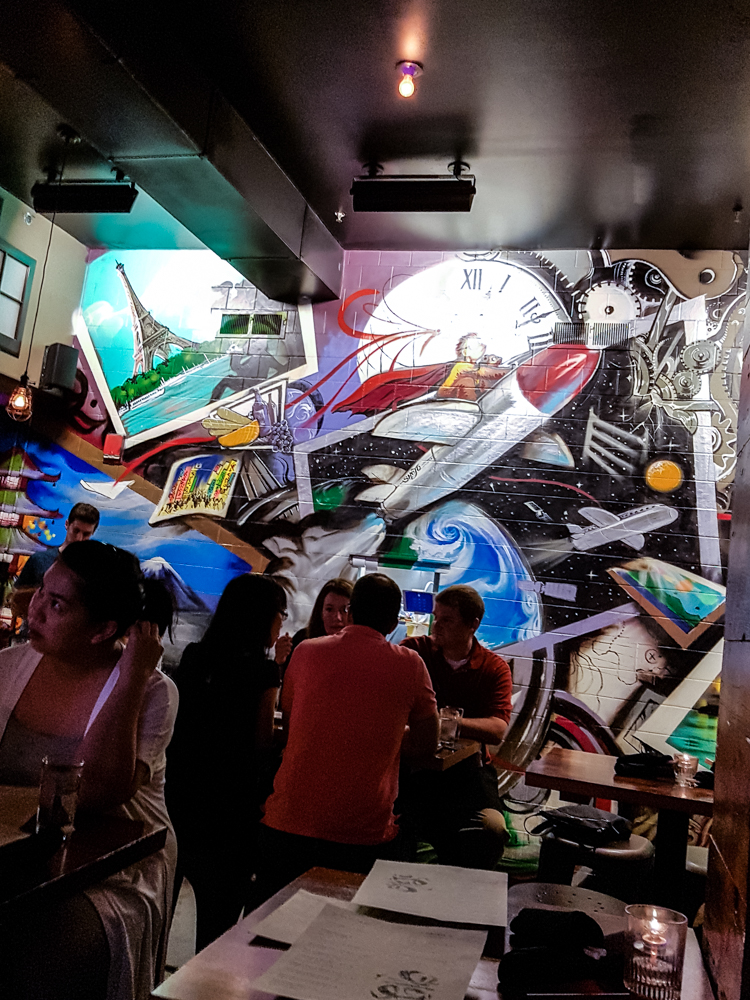
After our trip along the Freedom Trail, we headed back to the hotel to be in time for our reservation at a hidden pearl, the Shojo, in heart of Chinatown, serving Tapas with a mix of modern Japanese and Korean cuisine.

Source: Most information and facts were taken from the freedom trail map which costs 3$.
 Adventure Time