Borobudur, the holiest Buddhist temple in the world and one of the largest in south-east Asia. It was built in the 8th century and consists of a huge pyramid with with 9 floors. The walls of the first ones are covered over a length of 5 kilometers with bas-reliefs showing the life of Buddha. On the three top levels Stupas, bell-shaped buildings each containing a Buddha statue, are arranged concentric around one big Stupa. The temple is aligned with the four cardinal directions and it’s important to enter from the east side and to circuit the temple three times clock-wise while ascending.
We really enjoyed the temple itself and luckily there were not so many tourists but unfortunately the once who were there, did not even stick to the simple rules which were shown on signs almost every 20 meters. As it is clear to not lean against or sit onto the temple especially on the top levels almost every tourist was leaning against the Stupas or climbing on the walls, even if the sign indicating the prohibition was right next to him. Therefore the mystical atmosphere the temple would have created was highly derogated. Nevertheless it is really worth a visit and although the entrance fee is quite high, especially in our case since we realized on our arrival in Jogja that we left our credit card in Bali (a new one is on the way but will take several days, so we have to be a little bit thrifty with our remaining cash), the money is invested very well to keep the area clean and the temple intact. So lets just enjoy some pictures showing the size and beauty of the Borobudur temple:
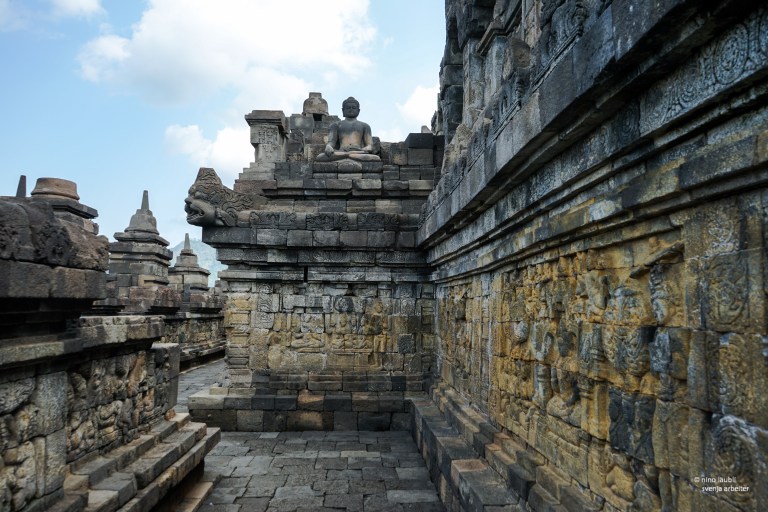 One of the lower floors with the bas-reliefs covering the walls.
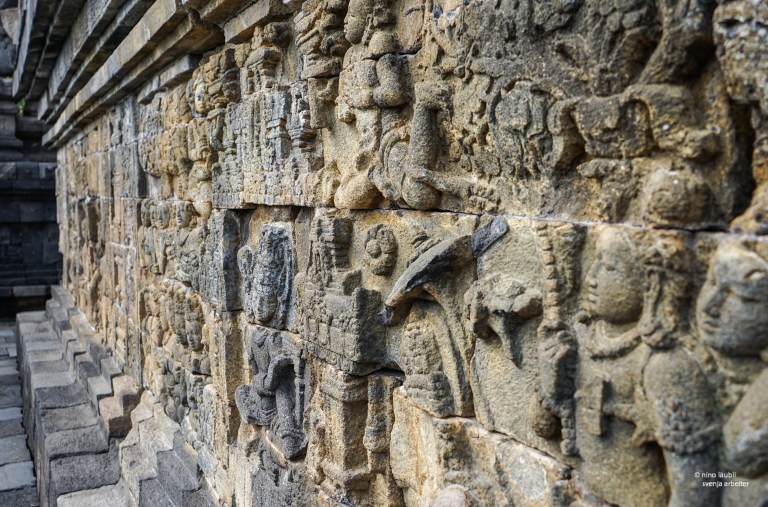 A small part of the over 5 kilometers long bas-relief showing the life of Buddha.
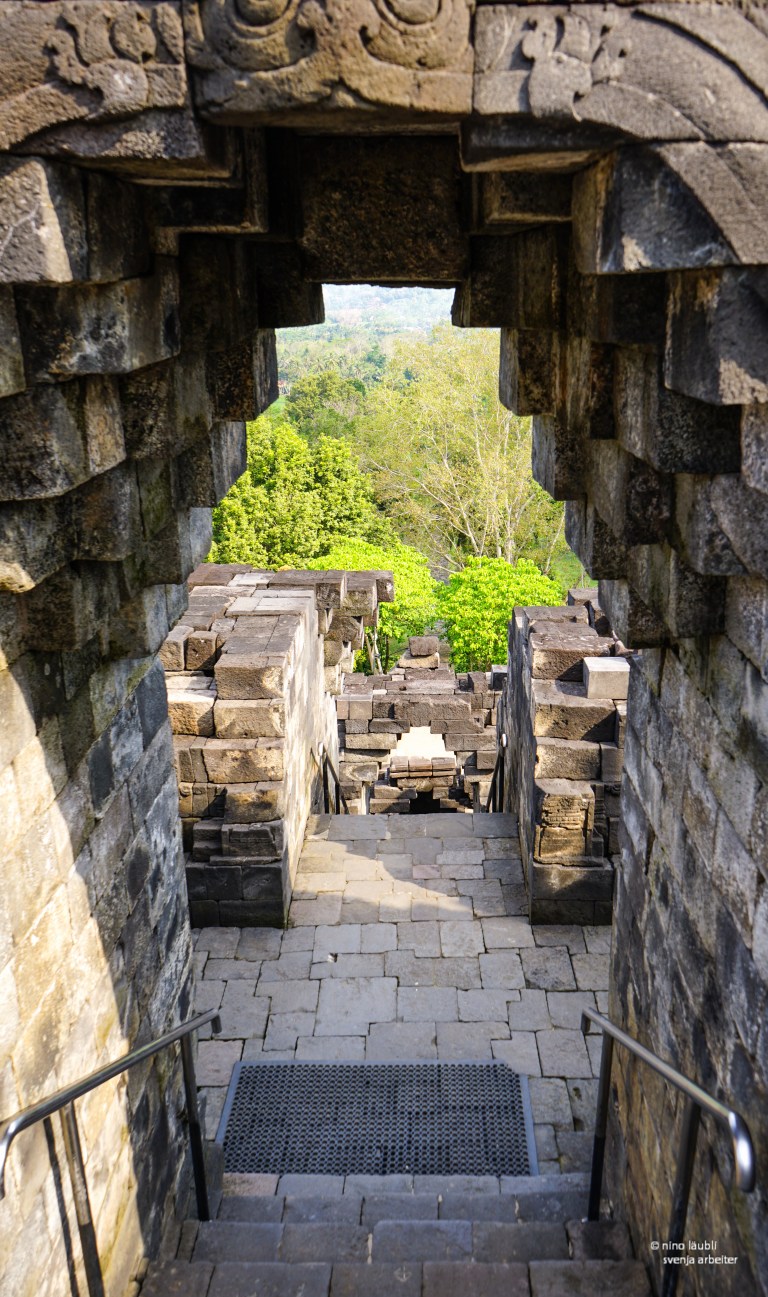 The temple is surrounded by a green area and is located about 40 kilometers away from Yogyakarta.
 The top levels of the pyramid are terraces with concentrically arranged Stupas as the once you can see on the right side.
 Adventure Time